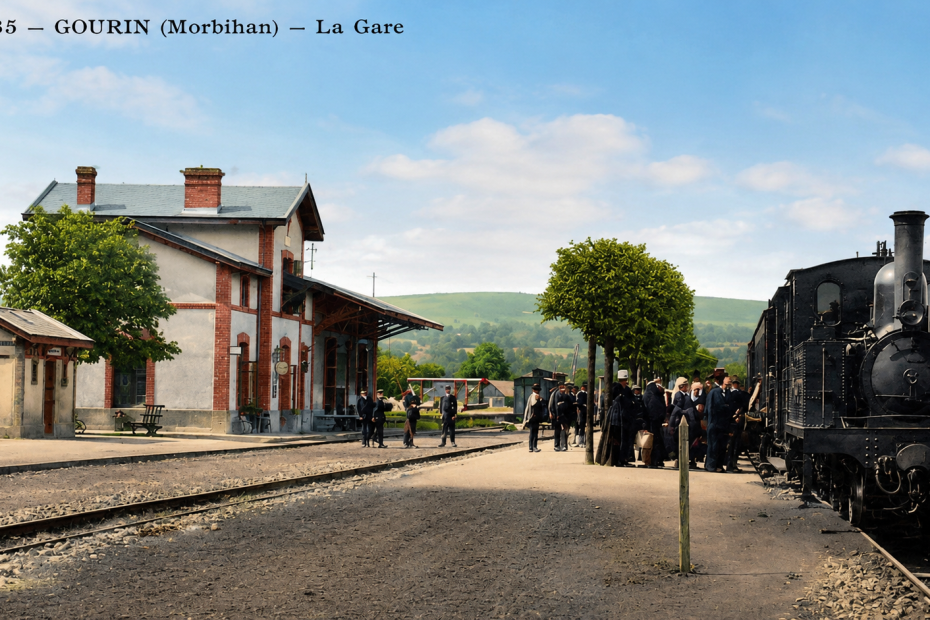
Pendant la période faste de la restauration française à New-York, le célèbre journal réalisa un article fabuleux sur l’émigration des Bretons et leur faculté d’être les meilleurs serveurs de restaurant. Le journaliste américain fera de nombreuses références à Gourin: origine de la plupart d’entre eux…

Lire l’article sur le site du New York Times
Lire aussi : Les vrais chiffres de l’émigration des Bretons
Lire en français:
Ils avaient passé leurs journées debout, à servir à table ou à travailler en cuisine. Ils ont passé toute la nuit debout à danser au 17e Bal breton annuel, qui s’est tenu samedi dernier au Manhattan Center. Et beaucoup d’entre eux dansaient encore dimanche, au-dessus du restaurant La Grillade.
Presque tous les restaurants français étaient représentés au bal, car la plupart des restaurants français emploient des serveurs, des commis de salle ou des cuisiniers originaires de Bretagne. Et nombre d’entre eux viennent d’une petite ville et de ses environs agricoles : Gourin.
À leur arrivée à New York au début du XXe siècle, les Bretons travaillaient, se divertissaient et vivaient si étroitement ensemble que peu d’entre eux ont appris l’anglais. Pourtant, à leur retour, on les a rapidement surnommés « les Américains ». Aujourd’hui, la plupart semblent apprendre l’anglais assez vite, peut-être parce qu’ils ne vivent plus tous ensemble dans les années 40, autour de la Neuvième Avenue. Beaucoup ont déménagé à Astoria, dans le Queens, et quelques-uns vivent dans l’Upper East Side.
Les Bretons, peuple celte (chassés d’Angleterre par les Anglo-Saxons il y a environ quatorze siècles), n’ont pas de grande tradition culinaire. « Mais ils ont un don naturel pour la cuisine », a déclaré Mme Robert Low, épouse du conseiller municipal, qui a employé plusieurs gouvernantes bretonnes. Mme Low, qui a précisé qu’aucun Breton ne partait sans être remplacé, a rendu visite à des Bretons rentrés en France.
« Ils semblent capables de s’adapter aussi bien à leur nouvel environnement qu’à celui de leur pays d’origine », a-t-elle affirmé. Mais tous n’ont pas trouvé le bonheur dans ce coin reculé du nord-ouest de la France. L’Association bretonne estime d’ailleurs que la moitié seulement tente de revenir.
Selon le journal France-Amérique, on compte environ 12 000 Bretons à New York (plus d’un tiers de la population française de la ville). Le journal estime également que les trois quarts des serveurs français y sont bretons.
Les enfants sont restés en France
Le modèle originel semblait être que le mari travaille dans un restaurant et la femme comme domestique. Les enfants restaient en France jusqu’à ce que leurs parents les fassent venir ou rentrent au pays avec suffisamment d’argent pour ouvrir un petit commerce. Aujourd’hui, la plupart des Bretons qui s’installent sont célibataires et, même mariés et parents, ils peuvent se permettre de garder leurs enfants ici et de vivre des revenus du mari. Par conséquent, les enfants grandissent dans ce pays et, même s’ils fréquentent des écoles françaises, ils préfèrent parler anglais, la langue de la télévision. « On s’intéresse davantage à un pays à travers ses enfants », explique Jean Bodenes, propriétaire du restaurant Le Cheval Blanc (145, rue 45 Est).
M. Bodenes, sans enfant et installé ici depuis 37 ans, souhaite prendre sa retraite en Bretagne. Il attribue le début du monopole breton des restaurants à la fermeture de l’usine Michelin de Milltown, dans le New Jersey, pendant la Grande Dépression. Beaucoup de Bretons y avaient été employés et la plupart sont venus à New York où, faute de compétences particulières et parlant peu anglais, ils ont trouvé du travail comme plongeurs ou commis de salle dans des restaurants français.
L’une des figures emblématiques de la communauté bretonne est l’imposante Anna Daniel, arrivée en 1914 et que l’on pourrait considérer comme représentative des premiers immigrants. Elle a travaillé pour un avocat sur Park Avenue (elle y travaille toujours), a épousé un chef cuisinier qui travaillait dans un club privé jusqu’à son décès, et a eu deux filles qu’elle a envoyées en France chez sa sœur avant de les faire revenir ici. Bien que Mme Daniel possède une maison à Gourin, elle n’a pas l’intention d’y vivre. « C’est ici que je suis chez moi », dit-elle, la main sur le cœur.
Mme Daniel avait l’habitude de faire venir beaucoup de jeunes filles pour travailler chez des amis de ses employeurs. « Combien de fois suis-je allée à Ellis Island pour les chercher ! », se souvient-elle. « Je me portais garante pour elles et je les aidais à trouver une famille. Maintenant, tout cela est terminé. » Mme Daniel faisait référence aux nouvelles lois sur l’immigration, mises en œuvre l’année dernière, qui exigent désormais une compétence particulière ou un lien de parenté très proche pour entrer dans le pays. De ce fait, peu de Bretons peuvent désormais venir s’installer ici. Les restaurateurs s’inquiètent déjà de la situation. « Dans quelques années, ce sera très difficile », a déclaré Édouard Duthu, copropriétaire du Marmiton (216, rue 49 Est). M. Duthu n’est pas breton, mais la plupart de ses employés le sont. « Et un restaurant français sans personnel français n’est pas très apprécié », a-t-il ajouté. Comme la plupart des Français, M. Duthu observe les Bretons avec un mélange d’exaspération et d’admiration. « Ce sont des personnalités fortes, têtues », a-t-il dit. « Mais si on les traite bien, ils travaillent dur. Et croyez-moi,Ce n’est pas une mince affaire de porter la vaisselle toute la journée.
Les Bretons travaillent dur car ils y sont habitués et parce que la plupart d’entre eux espèrent un jour ouvrir leur propre restaurant. Gilbert Le Dour, serveur à La Croisette (1063, Première Avenue, à l’angle de la 58e Rue), ne fait pas exception.
Samedi, au bal, M. Le Dour portait des favoris et un costume traditionnel et exécutait des danses folkloriques. Dimanche, il portait des favoris et des vêtements décontractés et se livrait à des acrobaties périlleuses à La Grillade, où danser au son d’un quatuor italien coûte 2 dollars les soirs de week-end. M. Le Dour, qui travaille ici depuis quatre ans, dit préférer être ici quand il est d’ici et là-bas quand il est d’ailleurs. « Je suis un peu perdu », a-t-il admis, ajoutant que dans trois mois, il prévoit de passer des vacances à Gourin et d’épouser une Bretonne.
Reconnaissant pour les opportunités
« En France, je n’aurais jamais pu ouvrir un restaurant comme celui-ci, même en y consacrant toute ma vie », a déclaré Albert Deniel, qui a inauguré La Grillade (845, Huitième Avenue, à l’angle de la 51e Rue) en août. M. Deniel est arrivé à New York en 1957 et a commencé comme commis de salle à La Potinière (60, 55e Rue Ouest). Un an plus tard, il a épousé Lisette, qui travaillait à la caisse du restaurant. Ils ont deux enfants scolarisés à l’École française, mais qui préfèrent parler anglais.
« Nous essayons de maintenir le lien social à New York en organisant quatre ou cinq réunions par an », a expliqué Roger Gourin, président de l’Association bretonne, qui compte 300 membres.
« Tous ces mouvements nationalistes commencent à s’estomper », a déclaré JJ O’Brien, commissaire adjoint aux événements publics, qui représentait le maire au bal. « Mais je pense que les Bretons sont probablement les plus unis. »
Lire en anglais:
THEY had been on their feet all day, waiting on table or working in kitchens. They were on their feet all night, dancing, at the 17th annual Brittany Ball, held last Saturday at Manhattan Center. And a lot of them were dancing again on Sunday, above La Grillade restaurant.
Almost all French restaurants were represented at the ball, because almost all French restaurants have waiters or bus boys or cooks who hail from Brittany. And many of them come from one small town and its farming environs, the town of Gourin.
When they first came here in the early part to this century, the Bretons worked, played and stayed so tightly together in New York that few of them learned to speak English. Nevertheless, they were promptly dubbed The Americans when they returned home.
Today, most of them seem to pick up English quite fast, perhaps because not all of them still live together in the Forties around Ninth Avenue.
Many have moved to Astoria, Queens, and a few live on the East Side.
The Bretons, who are a Celtic people (they were driven out of England by the Anglo-Saxons about 14 centuries ago), have no great culinary tradition.
“But they have a natural feel for cooking,” said Mrs. Robert Low, wife of the councilman, who has had a succession of Breton housekeepers.
Mrs. Low, who said that a Breton never left without finding a replacement, has visited Bretons who have returned to France.
They seem to have the capacity of being equally happy in either environment, she said.
But not all have been happy back in that bleak northwest corner of France.
And the Brittany Association estimates that only about halt even try to return.
According to the newspaper France-Amerique, there are about 12,000 Bretons in New York City (more than one-third to the French population here). Three-quarters of the French waiters here are Bretons, the newspaper estimates.
Children Stayed in France
The original pattern seemed to be for the husband to go to work in a restaurant and the wife to go into domestic service.
The children stayed in France until the parents either sent for them or returned home with enough money to start a small business.
Today, most Bretons who come over are single and, even when they marry and have a family, they can afford to keep the children here and live on what the husband makes. Consequently the children grow up in this country and, even though they may go to French schools, they prefer to speak English, the language of television.
“People take more interest in a country through their children than they would otherwise, » said Jean Bodenes, owner of Le Cheval Blanc (145 East 45th Street).
Mr. Bodenes, who has no children and has been here for 37 years, would like to retire to Brittany.
Mr. Bodenes traces the start of the Breton restaurant monopoly to the closing of the Michelin Tire Corporation’s factory in Milltown, N. J. during the Depression.
A lot of Bretons had been employed there and most of them came to New York where, because they had no particular skills and little English, they went to work as dishwashers or bus boys at French restaurants.
One of the leading figures in the Breton community is the ample one of Mrs. Anna Daniel, who came here in 1914 and might he considered typical of early immigrants. She went to work for a lawyer on Park Avenue (she is still in service there), married a chef who worked in a private club until his death, and had two daughters whom she sent back to France to be raised by her sister before bringing them back here.NAlthough Mrs. Daniel owns a house back in Gourin, she does not plan to live there. “This is my home,” she said, placing her hands over heart.
Mrs. Daniel used to bring a lot of girls over to work for friends of her employers. “How many times have I gone to Ellis Island to get them,” she reminisced. I would vouch for them and then get them fixed up properly so they could work in homes. Now all that has stopped. »
Mrs. Daniel was referring to the new immigration laws, implemented last year, under which it is necessary to have a special skill or a very close relative in order to get into this country. As a result, few Bretons are now able to come here.
Restaurant owners are already worried about the situation. “In a few years it will be very difficult,” said Edouard Duthu, one of the owners of Le Marmiton ( 216 East 49th Street). Mr. Duthu is not from Brittany, but most of his employees are. “And a French restaurant without French help is not much appreciated. » he added.
Like most people from other regions of France, Mr. Duthu looks upon the Bretons with exasperation and admiration.
“They are individuals, stubborn, » he said. “But if you treat them right they work! very hard. And believe me it is no picnic to carry dishes all day.
The Bretons work hard because they are used to hard work and because most of them hope some day to open a restaurant of their own.
Gilbert Le Dour, a waiter at La Croisette (1063 First Avenue, at 58th Street), is no exception.
On Saturday, at the ball, Mr. Le Dour was wearing sideburns and native costume and doing folk dances.
On Sunday he was wearing sideburns and casual clothes and doing spine-dislocating acrobatics at La Grillade, where dancing to an Italian four-piece band costs $2 on weekend evenings.
Mr. Le Dour, who has been here four years, says he likes it better here when he is here and there when he is there.
“I’m mixed up,” he admitted, and added that in three months he plans to take a vacation in Gourin and marry a local girl.
Grateful for Opportunities
“In France I wouldn’t be able to open a restaurant like this, even if I worked my whole life, » said Albert Deniel, who opened La Grillade ( 845 Eighth Avenue, at 51st Street) in August.
Mr. Deniel came here in 1957 and started work as a bus boy at La Potiniere (60 West 55th Street).
A year later he married Lisette, who was the checkroom girl at the restaurant.
They have two children who attend l’Ecole Francaise, but prefer to speak English.
« We try to keep together in New York by having four or five gatherings a year.” said Roger Gourin, president of the 300-member Brittany Association.
“All these nationalistic things are beginning to die out, » said Deputy Commissioner of Public Events J. J. O’Brien who represented the Mayor at the ball. “But I think the Bretons are probably holding together better than any of the others.”
BRETAGNE
Le New York Times (par Jack Manning et Barton Silverman)
- RCF à Gourin : Bretagne TransAmerica raconte l’histoire des Bretons d’Amérique

- Danielle Délie, la fille de Gourinois disparue dans les attentats du 11 septembre 2001

- Pourquoi les Bretons de la région de Gourin sont-ils partis ?

- En 1993, « Bretagne North America » racontait déjà l’Amérique depuis Gourin

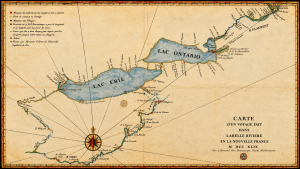
- Joseph-Pierre de Bonnécamps, le savant breton qui cartographia la Nouvelle-France

- Le « Lac Ontario » existait avant les Etats-Unis ! Un Gourinois d’adoption l’a cartographié en 1747.